Men’s Pelvic Floor Issues: Why Attention is Crucial
Pelvic floor health, though critically important, often remains an undiscussed topic in Men’s Health. Many men mistakenly believe that conditions like chronic pelvic pain, erectile dysfunction, or urinary incontinence are simply unavoidable aspects of aging or other medical conditions like prostatitis. However, these pelvic floor symptoms frequently originate from dysfunctions within the pelvic floor muscles – a complex group of muscles supporting the pelvic organs. Importantly, these issues are often treatable, and understanding male pelvic floor disorders, a common condition, can help demystify them and highlight effective, targeted treatment options like dry needling.
Common Signs of Male Pelvic Floor Dysfunction
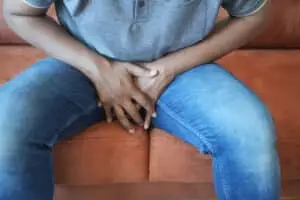
Men may ignore pelvic discomfort or urinary changes until symptoms become severe. Early identification by a healthcare professional is key to effective treatment and a better quality of life. Common symptoms of pelvic floor dysfunction in men include:
Chronic Pelvic Pain Syndrome (CPPS): Often misdiagnosed as chronic prostatitis, this condition can involve persistent pain in the pelvic area, perineum (the area between the scrotum and anus), genitals, or during/after urination or ejaculation. Myofascial trigger points (tender knots) in the muscles of the pelvic floor are a common source of this pain.1,2 This can sometimes overlap with symptoms of Irritable bowel syndrome or interstitial cystitis (also known as Bladder Pain Syndrome).
Erectile Dysfunction (ED) and Premature Ejaculation: Tight or dysfunctional pelvic floor muscles can impair blood flow and nerve function crucial for erections and ejaculatory control. Releasing tension in these muscles can contribute to improved sexual activity.3,4
Pelvic Floor Muscle Tightness (Hypertonic Pelvic Floor): Excessive tension in the pelvic muscles can lead to pain, Painful urination, urinary hesitancy, and difficulty with bowel movements. Men might also experience pain that worsens with prolonged sitting or certain exercises.2,5
Urinary Symptoms: These can include post-void dribbling (leakage after urination), urinary frequency, an urgent need to urinate, stress incontinence (leakage with cough/sneeze/exertion), or symptoms of an overactive bladder.6 Some men experience Bladder pain. These issues can be particularly concerning after prostate surgery, such as a radical prostatectomy.
Fecal Incontinence: While less common, difficulty controlling gas or stool can also be a sign of pelvic floor muscle dysfunction.
Associated Lower Back, Hip, or Groin Pain: The pelvic floor muscles work in concert with other muscle groups of the lower back, hips, and abdomen. Dysfunction in the pelvic floor can contribute to or be exacerbated by pain in these neighboring areas.7
Pudendal Neuralgia: Pain, numbness, or tingling along the distribution of the pudendal nerve, often worsened by sitting, can be a debilitating aspect of pelvic floor problems.9
Understanding Key Anatomy in Male Pelvic Health
A brief understanding of the pelvic floor anatomy helps clarify how dysfunction can arise:
Key Muscles: The pelvic floor includes several layers of muscles. Important ones are the levator ani group (forming the main sling supporting pelvic organs), obturator internus (deep hip rotator connected to the pelvic floor), bulbospongiosus (involved in erection and ejaculation), and ischiocavernosus (aids in maintaining erection). Trigger points in these muscles of the pelvic floor are common sources of pain and dysfunction.2,8
Essential Nerves: The pudendal nerve is a primary nerve for the pelvis, providing sensation and motor control for sexual function, urination, and defecation. Irritation or compression of this nerve, sometimes related to tight pelvic floor muscles, can cause significant pain, leading to conditions like Pudendal Neuralgia.9
Connective Tissue: Ligaments and fascia (a type of connective tissue) provide support and stability to the pelvic organs and muscles, and can also be affected in pelvic floor disorders.
Dry Needling: A Targeted Treatment for Male Pelvic Floor Dysfunction
For men suffering from pelvic floor muscle dysfunction, especially pain driven by muscle tightness and trigger points, dry needling offers a highly effective and specific treatment approach, often provided by a specially trained physical therapist.
What is Dry Needling? Dry needling involves inserting a thin filiform needle into a myofascial trigger point. Trigger points are hyperirritable spots in taut bands of skeletal muscle that can cause local pain and referred pain patterns. The goal of dry needling is to release these trigger points, reduce muscle tension, alleviate pain, and improve muscle function.10
How Dry Needling Helps Male Pelvic Floor Issues:
Releasing Trigger Points: Pelvic floor muscles like the obturator internus, levator ani, and others can develop trigger points that contribute to CPPS, sexual dysfunction, and urinary symptoms. Dry needling directly targets and deactivates these trigger points.2,11,12
Reducing Pain and Inflammation: By releasing muscle tightness and improving blood flow to the area, dry needling can significantly reduce chronic pelvic pain and associated discomfort, offering potential for long term relief.10,13
Improving Muscle Function and Coordination: When muscles are overly tight (a hypertonic pelvic floor) and contain trigger points, they cannot function optimally. Dry needling can help restore normal muscle length and activation patterns, which is crucial for bladder, bowel, and sexual function.4,12
Neuromodulation: The insertion of needles can influence nerve pathways, helping to modulate pain signals and reduce nerve sensitivity, such as in cases of pudendal nerve irritation.10
Studies and clinical experience are increasingly demonstrating the benefits of dry needling, often as part of a comprehensive pelvic floor physical therapy program, for men with chronic pelvic pain, including those previously diagnosed with non-bacterial prostatitis.2,11,13
Benefits of Comprehensive Pelvic Floor Therapy (Including Dry Needling)
A tailored pelvic floor physical therapy program, which may include dry needling and manual therapy, can lead to significant improvements:
Reduced pelvic, perineal, and genital pain.
Better bladder control, reduced urinary frequency and urgency, and less post-void dribbling.
Improved sexual activity, including erectile function and reduced pain with ejaculation.
Relief from associated lower back, hip, or groin pain.
Enhanced core stability and overall quality of life.
Is It Just About Kegels?
While pelvic floor muscle exercise like Kegels are often mentioned, they are not always appropriate for every man with pelvic floor problems. If your pelvic floor muscles are already tight and overactive (a hypertonic pelvic floor), performing Kegels can potentially worsen your symptoms. In such cases, treatments aimed at releasing muscle tension and trigger points, like dry needling and manual therapy, are often the necessary first step before any strengthening exercises are considered. A thorough assessment by a pelvic floor physical therapist is crucial.
When to Seek Professional Help
If you are experiencing any of the symptoms of pelvic floor dysfunction discussed—such as persistent pelvic pain, urinary symptoms, or sexual dysfunction—it is vital to seek professional care from a healthcare provider specializing in male pelvic floor disorders. Many men suffer in silence due to embarrassment or lack of awareness that effective treatment options exist.
A specialist, such as a pelvic floor physical therapist, can perform a comprehensive assessment, which may include a physical exam and visual inspection, to identify the underlying cause of your symptoms and risk factors. They can then develop an individualized treatment plan. This plan may include dry needling, manual therapy, specific pelvic floor muscle exercise for relaxation or strengthening, and education on lifestyle changes and self-management strategies. While pelvic organ prolapse is less common in men than women, a thorough assessment will consider all aspects of pelvic health.
Take control of your pelvic health. Schedule a consultation today to learn if dry needling can help you find lasting relief and improve your quality of life.
Shoskes DA, Nickel JC, Dolinga R, Prots D. Clinical phenotyping of patients with chronic prostatitis/chronic pelvic pain syndrome and correlation with symptom severity. Urology. 2009;73(3):538-542. doi:10.1016/j.urology.2008.09.065 PubMed
Anderson RU, Sawyer T, Wise D, Morey A, Chan CA. Painful myofascial trigger points and pain sites in men with chronic prostatitis/chronic pelvic pain syndrome. J Urol. 2009;182(6):2753-2758. doi:10.1016/j.juro.2009.08.042 PubMed
Cohen D, Gonzalez J, Goldstein I. The role of pelvic floor muscles in male sexual dysfunction and pelvic pain. Sex Med Rev. 2016;4(1):53-62. doi:10.1016/j.sxmr.2015.10.001 PubMed
Rosenbaum TY. Pelvic floor involvement in male and female sexual dysfunction and the role of pelvic floor rehabilitation in treatment: a literature review. J Sex Med. 2007;4(1):4-13. doi:10.1111/j.1743-6109.2006.00393.x PubMed
Montenegro ML, Mateus-Vasconcelos EC, Silva JC, Nogueira AA, Lemos CN. Importance of pelvic muscle tenderness evaluation in women with chronic pelvic pain. Pain Med. 2010;11(2):224-228. doi:10.1111/j.1526-4637.2009.00763.x PubMed
Berghmans B. Physiotherapy for pelvic pain and female sexual dysfunction: an update. Sexologies. 2018;27(3):e57-e62. doi:10.1016/j.sexol.2018.04.001 ScienceDirect
Dufour S, Vandyken C, Forget MJ, Vandyken B. Association between lumbopelvic pain and pelvic floor dysfunction in women: A systematic review. Musculoskelet Sci Pract. 2018;34:47-57. doi:10.1016/j.msksp.2017.12.001 PubMed
Pastore EA, Katzman WB. Recognizing and treating pelvic pain and pelvic floor dysfunction. Phys Ther. 2012;92(7):930-943. doi:10.2522/ptj.20110249 PubMed
Hibner M, Desai N, Robertson LJ, Nour M. Pudendal neuralgia. J Minim Invasive Gynecol. 2010;17(2):148-153. doi:10.1016/j.jmig.2009.11.007 PubMed
Dommerholt J, Fernández-de-Las-Peñas C. Trigger Point Dry Needling: An Evidence and Clinical-Based Approach. 2nd ed. Elsevier; 2018. Elsevier
Anderson RU, Wise D, Sawyer T, Chan C. Integration of myofascial trigger point release and paradoxical relaxation training treatment of chronic pelvic pain in men. J Urol. 2005;174(1):155-160. doi:10.1097/01.ju.0000161609.31185.d5 PubMed
Doggweiler R, Whitmore KE, Meeks GR, et al. A standard for terminology in chronic pelvic pain syndromes: A report from the chronic pelvic pain working group of the International Continence Society. Neurourol Urodyn. 2017;36(4):984-1008. doi:10.1002/nau.23070 PubMed
Running places significant demands on the lower body, and tight calf muscles are a common complaint among runners of all levels. While this tightness may seem like a minor discomfort,…
Pain in the shoulder, chest, and arm can be a complex issue with many potential causes. One condition that is gaining more recognition, often called the forgotten pectoralis minor syndrome,…
Shoulder pain is a prevalent musculoskeletal complaint affecting individuals across all age groups, from youngsters leading fast-paced modern lives to older adults dealing with age-related conditions. Factors such as lack…
118 W. 72nd, Rear Lobby, Upper West Side, NY 10023 Evidence-based acupuncture and dry needling on the Upper West Side, NYC. From chronic pain, headaches, and pelvic floor dysfunction, Dr. Jordan Barber integrates the highest level of training with compassionate care to help you thrive. Disclaimer: This site does not provide medical advice. Always consult a qualified healthcare professional before making changes to your health. Read our full disclaimer
Quick Links
Got Questions?
Limited spots available each week book now to reserve yours