Do You Really Need Ultrasound Guided Dry Needling? A Research-Based Perspective on Effective Treatment
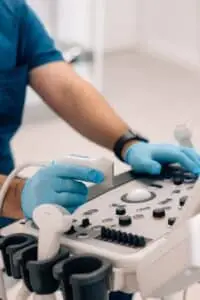
If you’re exploring dry needling for pain relief, particularly for conditions like myofascial pain syndrome, back pain, or other musculoskeletal disorders, you’ve likely encountered a confusing array of information. One of the biggest questions emerging is about the use of ultrasound imaging guidance, also called ultrasound guided dry needling. Some clinics claim it’s an absolute necessity, the only way to perform this treatment technique accurately and safely for soft tissue issues.
As a practitioner who has published PubMed-indexed research, including a literature review on the very history and mechanisms of dry needling techniques,⁵ I want to provide a clear, evidence-based answer for your pain management journey.
So, do you need US guidance for dry needling to be effective? The short answer, based on extensive clinical experience and the available scientific literature, including clinical trials, is no. In a 2022 systematic review and meta-analysis comparing ultrasound-guided dry needling to traditional dry needling, researchers found that ultrasound guidance was not superior for improving pain (often measured by a visual analogue scale), disability, or pain pressure thresholds.¹ While diagnostic ultrasound is a valuable tool, its mandatory use for every dry needling procedure is not supported by evidence and may lead to unnecessary costs for patients seeking relief from chronic pain.
Let’s break down the facts and dispel some of the myths you might encounter online regarding treatment approaches.
Myth: Deep trigger points are impossible to identify and treat without ultrasound.
The Reality: This statement fundamentally misunderstands the skill of a highly trained practitioner. The foundation of any effective manual therapy, including dry needling, is a sophisticated understanding of anatomy, expert palpation skills (often part of a thorough physical examination), and direct patient feedback. While the reliability of palpation has been debated, it remains the clinical standard for identifying myofascial trigger points and is reliable when performed by a skilled clinician using a standardized method.³
Dry needling is not merely about poking a single trigger point; it’s about influencing the local affected area, modulating the nervous system, and addressing scar tissue and fascial adhesions within connective tissue.⁴ This nuanced approach relies on the practitioner’s hands and knowledge, not a screen, to improve muscle function and reduce muscle stiffness.
Furthermore, the idea that fine needles cannot be guided without ultrasound is misleading. The very gauge of the small needles used in dry needling can be difficult to visualize clearly on ultrasound. Often, the technology is used to locate a target area before the procedure and to observe effects after, not to actively guide the needle tip in real-time for the entire treatment to ensure accurate needle placement.
A Point-by-Point Look at Claims for Ultrasound Guided Dry Needling
Let’s look at the common list of “advantages” promoted by some clinics and analyze them from a research-oriented perspective.
Claim: Dramatically improves accuracy and helps determine the exact location of the trigger point.
Response: A practitioner’s hands, trained over thousands of hours, are incredibly sensitive instruments. Accuracy is achieved through anatomical knowledge and palpation.³ While ultrasound can confirm a location, it has not been shown to be superior to a skilled practitioner’s placement for the purpose of improving clinical outcomes.¹
Claim: Allows us to visually observe the twitch response in real time.
Response: The local twitch response (LTR) is a palpable spinal cord reflex. While seeing it on a screen is an interesting visual, it does not inherently make the treatment more effective. An overemphasis on eliciting LTRs can be a sign of a limited understanding of broader needling theories. Other therapeutic responses, such as waiting for a sensation to subside or for an area to cease responding to stimuli, can be equally or even more important for effective outcomes.⁶ Focusing exclusively on LTRs ignores other significant neurological and physiological effects of needling, including impacts on blood flow and the needle effect on skeletal muscle.⁴
Claim: Prevents needle penetration of joints, viscera, pleura, vascular, or neural bodies.
Response:Safety comes from training, not technology. This is a critical point. A 2020 systematic review of adverse events from dry needling found that major events are rare and typically associated with practitioner error.² The most important safety tool is a practitioner’s comprehensive knowledge of human anatomy: knowing the depth of the lungs, the path of major arteries, and the location of organs. A properly licensed practitioner is trained to be safe without a machine, potentially reducing recovery time.
Claim: Reduces the number of needling sessions needed.
Response: There is no high-quality research, such as a randomized clinical trial with a significant sample size, to validate this claim. A comprehensive systematic review found no evidence that ultrasound guidance improves outcomes or leads to faster results compared to standard dry needling.¹ Patient progress is determined by the accuracy of the diagnosis and the skill of the application, not by the use of an accessory machine.
Claim: Using ultrasound pre- and post-treatment to check for changes.
Response: This is a perfect example of using a tool for visualization, not for improving the treatment’s outcome itself. While it’s interesting to see changes in tissue density, this practice has not been validated in research (e.g., through case series or larger studies found on platforms like Google Scholar, PubMed, or ScienceDirect) to correlate with better or faster pain relief or functional improvement compared to standard dry needling.¹ It can be an unnecessary, costly addition to a specific treatment plan.
Evaluating the Evidence: Quality Matters
It’s important for patients to understand that not all “research” is created equal. Many studies, sometimes presented as case reports or a preliminary study, cited by proponents of routine ultrasound-guided dry needling are not published in high-impact, peer-reviewed journals (often found in databases like Elsevier journal collections). Often, these studies lack rigorous control groups, may be conducted in the proponent’s own clinic (creating a potential for bias), and may not have undergone strict Institutional Review Board (IRB) oversight, which ensures ethical research practices. Such self-promotional studies, where the conclusion conveniently supports the service being sold, should be viewed with caution.
This contrasts sharply with high-quality, peer-reviewed systematic reviews and meta-analyses, like the one cited earlier,¹ which synthesize data from multiple well-conducted studies and conclude that US-guided DN does not offer superior outcomes. The efficacy of ultrasound in this context is not about a significant difference in patient reported pain intensity.
For full transparency, I have also utilized ultrasound technology in an exploratory research context. My colleagues and I published a retrospective study observing ultrasound evidence of trigger point size reduction following a specific dry needling acupuncture technique.⁷ This study used ultrasound as a validation method to observe physiological changes. However, this type of exploratory research does not, and should not, lead to the conclusion that ultrasound guidance is necessary or superior for every dry needling application in clinical practice. It simply demonstrates one way the technology can be used to investigate treatment effects, not a mandate for its routine use.
The History of Dry Needling and Why It Matters
Some clinics incorrectly state they were the “first” to practice dry needling in the United States or that it is entirely separate from acupuncture. This is historically false. As I detail in my PubMed-listed research, dry needling evolved directly from the practice of acupuncture, specifically the targeting of “ashi” or tender points, a practice documented for centuries.⁵ While it has grown to be a somewhat distinct skillset informed by Western anatomy and bioscience—much like modern Traditional Chinese Medicine (TCM) has also become informed by these advancements—to claim dry needling is completely unrelated to acupuncture is to ignore its rich history. The simplistic definition of acupuncture as merely balancing “chi” is a disservice to a complex medical system with a long and evidence-informed history of treating pain, including neuropathic pain and issues related to collagen fibers. Furthermore, this intense debate about the separation of dry needling from acupuncture is a uniquely American phenomenon, often driven by scope of practice issues and billing rights not typically found in many European Union countries and elsewhere.⁵
Why is Ultrasound-Guided Dry Needling So Popular Now?
If it’s not clinically necessary for a positive outcome, why the sudden push? We must consider the business of healthcare. Ultrasound is a billable procedure. Requiring its use for every dry needling treatment session can significantly increase the cost of care and the amount billed to insurance companies. This is often done without any evidence that it improves your outcome¹ or offers a more effective treatment than other treatment methods like corticosteroid injections, platelet-rich plasma, or extracorporeal shockwave therapy for conditions such as plantar fasciitis, lateral epicondylitis (tennis elbow), chronic tendinopathy affecting areas like the supraspinatus tendon, or jumper’s knee. As a patient, you have the right to care that is both effective and cost-efficient, promoting physical activity and return to function.
The Most Important Factor: Your Practitioner’s License and Training
This brings us to the most crucial consideration for your safety and success: who is holding the needle?
In New York State, the law is clear. Dry needling is considered to be within the scope of practice for Licensed Acupuncturists (L.Ac.), Medical Doctors (MDs), or Nurse Practitioners (NPs) only. Physical Therapists (PTs) and Chiropractors (DCs) are not legally permitted to perform dry needling in New York regardless of stated claims of education and proficiency.
When choosing a provider, ask them directly about their license. Safe practice is directly tied to rigorous training standards.² Your care should be directed and performed by someone with thousands of hours of dedicated training in safe needling techniques and human anatomy. A weekend certification course is not a substitute for this rigorous education. It is crucial for patient safety that practitioners only provide services within their legal scope of practice. If a state prohibits a specific profession from performing a procedure, individuals from that profession should not be involved in assisting or dictating that care, even for coworking muscles or especially when a longer needle might be considered. This is not about professional siloes, but about respecting legal boundaries and ensuring the highest standard of patient care. I deeply value my collaborative relationships with other healthcare professionals, including the many skilled Physical Therapists I work alongside. Just as I would never presume to dictate physical therapy protocols, which fall under their distinct expertise, all practitioners must respect the defined scope of their colleagues for optimal patient outcomes, especially when dealing with chronic low back pain or a knee injury requiring a reduction in the Neck Disability Index.
The Bottom Line: Skill Over Technology
Ultrasound has its place in musculoskeletal medicine as a powerful diagnostic tool. However, for the therapeutic application of dry needling, it is a tool, not a requirement for the treatment of myofascial pain.
Effective pain recovery relies on expertise and precision, not guesswork. It should be guided by an expert practitioner whose skill is in their hands and their head, not just on a screen. Don’t be swayed by marketing claims of technological superiority. Instead, seek out a highly-trained, properly licensed practitioner who focuses on a comprehensive diagnosis and a skillful, evidence-informed treatment plan tailored to you. Check for open access to their credentials and inquire about their approach to the effects of ultrasound-guided needling. If you are in New York City, please consider myself by reviewing my credentials and my dry needling or pelvic floor dry needling pages for more information.
Valera-Calero JA, Varol U, Álvarez-González J, et al. Is Ultrasound-Guided Dry Needling More Effective Than Dry Needling in Patients with Myofascial Trigger Points? A Systematic Review and Meta-Analysis. J Clin Med. 2022;11(17):5185. PubMed
Boyce D, Wempe H, Campbell C, et al. A Scoping Review of Dry Needling: Key Terminology, an Anatomical Competency Framework, and a Review of Adverse Events. Acupunct Med. 2020;38(4):236-247. PubMed
Myburgh C, Larsen AH, Hartvigsen J. A systematic, critical review of manual palpation for identifying myofascial trigger points: evidence and clinical significance. J Man Manip Ther. 2008;16(2):72-89. PubMed
Perreault T, Grubb M, Gendron B. The neurophysiological effects of dry needling on the autonomic nervous system in the management of musculoskeletal pain. J Athl Train. 2018;53(6):S1-S218. [Journal Link – Note: This appears to be a supplement/abstract collection, direct link to specific abstract may vary] (https://meridian.allenpress.com/jat/issue/53/6_Supplement)
Barber J, Lodo F, Nugent-Head A, Zeng X. Comparative techniques of acupuncture and dry needling intersecting with trigger point physiology and diagnostics: A cross-discipline narrative review. Med Acupunct. 2023;35(5):220-229. doi:10.1089/acu.2023.0029. PubMed
Lu D. Muscle Injuries and Pains Involving Back and Limbs. TCM Press; 2000. Link
Barber J, Messina D, Bhatt AM, Deutsch J. Ultrasound Evidence of Trigger Point Size Reduction in the Trapezius Following Dry Needling Acupuncture: A Retrospective Study. J Altern Complement Integr Med. 2024;10:537.
The connection between posture and vision is often overlooked, yet it carries significant implications for overall health and well-being. Emerging research suggests that how we sit, stand, and move may…
If you suffer from migraines or headaches, you know the toll they take—throbbing pain that stops you in your tracks, nausea that makes it hard to function, or sensitivity to…
Perimenopause marks a significant transition in a woman’s reproductive life, often accompanied by challenging symptoms such as hot flashes, mood swings, and irregular menstrual cycles. While hormone therapy is a…
118 W. 72nd, Rear Lobby, Upper West Side, NY 10023 Evidence-based acupuncture and dry needling on the Upper West Side, NYC. From chronic pain, headaches, and pelvic floor dysfunction, Dr. Jordan Barber integrates the highest level of training with compassionate care to help you thrive. Disclaimer: This site does not provide medical advice. Always consult a qualified healthcare professional before making changes to your health. Read our full disclaimer
Quick Links
Got Questions?
Limited spots available each week book now to reserve yours