Benign Prostatic Hyperplasia: How Pelvic Floor Dry Needling Can Support Men with BPH
Benign Prostatic Hyperplasia (BPH)—or enlarged prostate—is a common condition that affects nearly half of all men over age 50, and up to 90% by age 80.¹ While BPH is not cancerous, it often causes urinary urgency, frequency, weak stream, and incomplete emptying. What’s less commonly addressed is how these symptoms can lead to—or be aggravated by—pelvic floor dysfunction.
At my clinic, I offer pelvic floor dry needling as a part of an integrative approach for men with chronic pelvic discomfort, urinary symptoms, or postural tension stemming from prostate-related issues. Whether you’ve been diagnosed with BPH or are simply living with unexplained pelvic pressure and urinary symptoms, dry needling may help address the muscular patterns that are often overlooked.
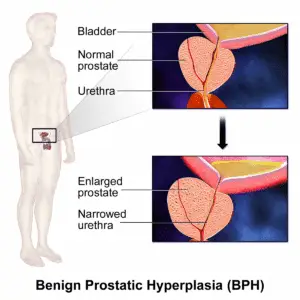
What Is BPH?
BPH is the non-cancerous enlargement of the prostate gland. As the prostate grows, it can compress the urethra and irritate the bladder, leading to lower urinary tract symptoms (LUTS) such as:
Difficulty starting urination
Weak or interrupted stream
Frequent urination, especially at night (nocturia)
A feeling of incomplete bladder emptying
Urinary urgency and occasional leakage
These symptoms are typically treated with medications (like alpha-blockers or 5-alpha-reductase inhibitors) or procedures that reduce prostate size. However, many patients continue to experience pelvic discomfort, urinary tension, or pain, even after medical treatment.
Pelvic Floor Dysfunction in Men with BPH
Men with BPH often develop compensatory tension in the pelvic floor muscles. When urination becomes difficult or incomplete, the body recruits nearby musculature—especially the levator ani, obturator internus, bulbospongiosus, and urogenital diaphragm—to assist with bladder function.
Over time, this compensation can lead to:
Trigger points and muscle knots
Fascial tightness compressing pelvic nerves
Pain or pressure in the perineum, anus, scrotum, or lower abdomen
Dysfunction in bowel, bladder, and sexual activity
How Dry Needling Helps
Pelvic floor dry needling uses sterile, thin needles to target hypertonic or dysfunctional pelvic muscles, releasing trigger points and improving blood flow and tissue mobility. In the context of BPH-related symptoms, dry needling may:
Reduce perineal and pelvic pain
Relieve muscular tension caused by straining or holding
Support better bladder emptying by normalizing pelvic tone
Improve sexual function and reduce performance-related anxiety linked to tension
Dry needling can be especially beneficial when combined with breath training, postural correction, and pelvic floor physical therapy.
A study in the Journal of Urology found that men with chronic pelvic pain syndrome felt better after getting myofascial physical therapy, which included trigger point release. More than half of the men in the study reported less pain and better urinary symptoms, showing this kind of hands-on treatment may help with pelvic floor muscle tension.1
Research Highlights
BPH prevalence increases with age and commonly leads to LUTS.
Large studies confirm that benign prostatic hyperplasia (BPH) and associated lower urinary tract symptoms (LUTS) become more prevalent as men age, significantly impacting quality of life.2
Pelvic floor muscle training (PFMT) improves urinary symptoms in men with BPH.
Randomized controlled trials show that adding PFMT to standard medication (silodosin) leads to greater improvements in urinary frequency, urgency, symptom scores, and flow rates in men with BPH and overactive bladder, compared to medication alone.2,3
Dry needling and myofascial therapy reduce pelvic pain and improve symptoms in men with pelvic floor dysfunction.
Clinical studies and case reports indicate that pelvic floor dry needling, as part of a multimodal therapy approach, can reduce pain, improve urinary symptoms, and address muscle hypertonicity in men with chronic pelvic pain syndromes, including those with BPH-related complaints.4,5,6
What You Can Expect in My Clinic
As a provider trained in pelvic floor dry needling and acupuncture, I take a neuromuscular approach to chronic pelvic symptoms. For men with BPH or post-prostate issues, care may include:
Targeted dry needling to the pelvic floor, hips, abdomen, and lumbar muscles
Acupuncture protocols to support autonomic regulation and bladder function
Breathing and core retraining strategies
Collaboration with urologists or pelvic floor physical therapists when needed
The goal is to normalize pelvic tone, improve urinary mechanics, and reduce pain and muscular guarding—not just manage symptoms.
Don’t Let Prostate Symptoms Control Your Life
If you’re dealing with urinary issues, pelvic tension, or lingering pain from BPH or related diagnoses, help is available. Dry needling and integrative pelvic care can address the muscular and fascial dysfunctions that medications often miss.
Conveniently located in NYC and specializing in male pelvic floor dysfunction and chronic pain.
FitzGerald MP, Payne CK, Lukacz ES, et al. Randomized multicenter clinical trial of myofascial physical therapy for the treatment of urological chronic pelvic pain syndromes. J Urol. 2013;189(1 Suppl):S234–S240. doi:10.1016/j.juro.2012.09.103 PubMed
Hagovska M, Svihra J Sr, Macko L, Breza J Jr, Svihra J Jr, Luptak J, Lachvac L. The effect of pelvic floor muscle training in men with benign prostatic hyperplasia and overactive bladder. World J Urol. 2024;42(1):287. doi:10.1007/s00345-024-04974-7 PubMed
Shubhankar G, Nigade P. A new frontier in BPE treatment: intersection of pelvic floor muscle training and LUTS. J Urol Surg. 2025;12(3):e123–e129. doi:10.4274/jus.galenos.2025.2025-3-6
Sheikhhoseini R, Arab AM. Dry needling in myofascial tracks in non-relaxing pelvic floor dysfunction: a case study. J Bodyw Mov Ther. 2018;22(2):337–340. doi:10.1016/j.jbmt.2017.09.016 PubMed
American Urological Association. Studies show men with orchialgia or chronic pelvic pain could benefit from multifaceted therapies including physical therapy, low doses of tadalafil, and dry needling. American Urological Association. May 20, 2018. UroToday
Porter AJ, Trotter S, Barta K. Effects of manual therapy and dry needling techniques for managing hypertonicity in the male pelvic floor: a case report. SOAR@USA. 2017.
Post-prostatectomy pain is a common but often overlooked challenge faced by men after prostate removal surgery. While prostatectomy can be life-saving in cases of prostate cancer or serious prostatic disease,…
Introduction Premenstrual Syndrome affects millions of women worldwide, often causing mood swings, bloating, and cramping. While conventional treatments such as hormonal medications and pain relievers offer relief, many seek natural…
If you suffer from migraines or headaches, you know the toll they take—throbbing pain that stops you in your tracks, nausea that makes it hard to function, or sensitivity to…
118 W. 72nd, Rear Lobby, Upper West Side, NY 10023 Evidence-based acupuncture and dry needling on the Upper West Side, NYC. From chronic pain, headaches, and pelvic floor dysfunction, Dr. Jordan Barber integrates the highest level of training with compassionate care to help you thrive. Disclaimer: This site does not provide medical advice. Always consult a qualified healthcare professional before making changes to your health. Read our full disclaimer
Quick Links
Got Questions?
Limited spots available each week book now to reserve yours