How Dry Needling Compares to Other Therapies (A Data Snapshot)
Table of Contents
If you’ve ever dealt with that stubborn knot in your shoulder that never seems to go away, the deep ache in your low back after a long day, or a nagging tightness that limits your favorite activities, you know how frustrating persistent muscle pain can be. Often, the source of this discomfort is more complex than a simple muscle strain. The culprit is frequently something called a myofascial trigger point—a tiny, hyper-irritable knot of muscle fiber that can cause not only localized pain but also referred pain in other areas of the body.1 These trigger points are the hidden drivers behind many chronic pain cycles, keeping muscles tight, weak, and painful.3
While many therapies aim to provide relief, a modern, precise, and scientifically-informed technique called dry needling is gaining recognition for its ability to go directly to the source of the problem. It isn’t a general treatment for overall soreness; it’s a targeted intervention designed specifically to release these dysfunctional trigger points and reset the muscle, paving the way for lasting recovery.4 This article provides a data-driven look at how dry needling works and how it compares to other common therapies, helping you understand if it could be the key to unlocking your relief.
What is Dry Needling? A Modern Approach to Muscle Pain
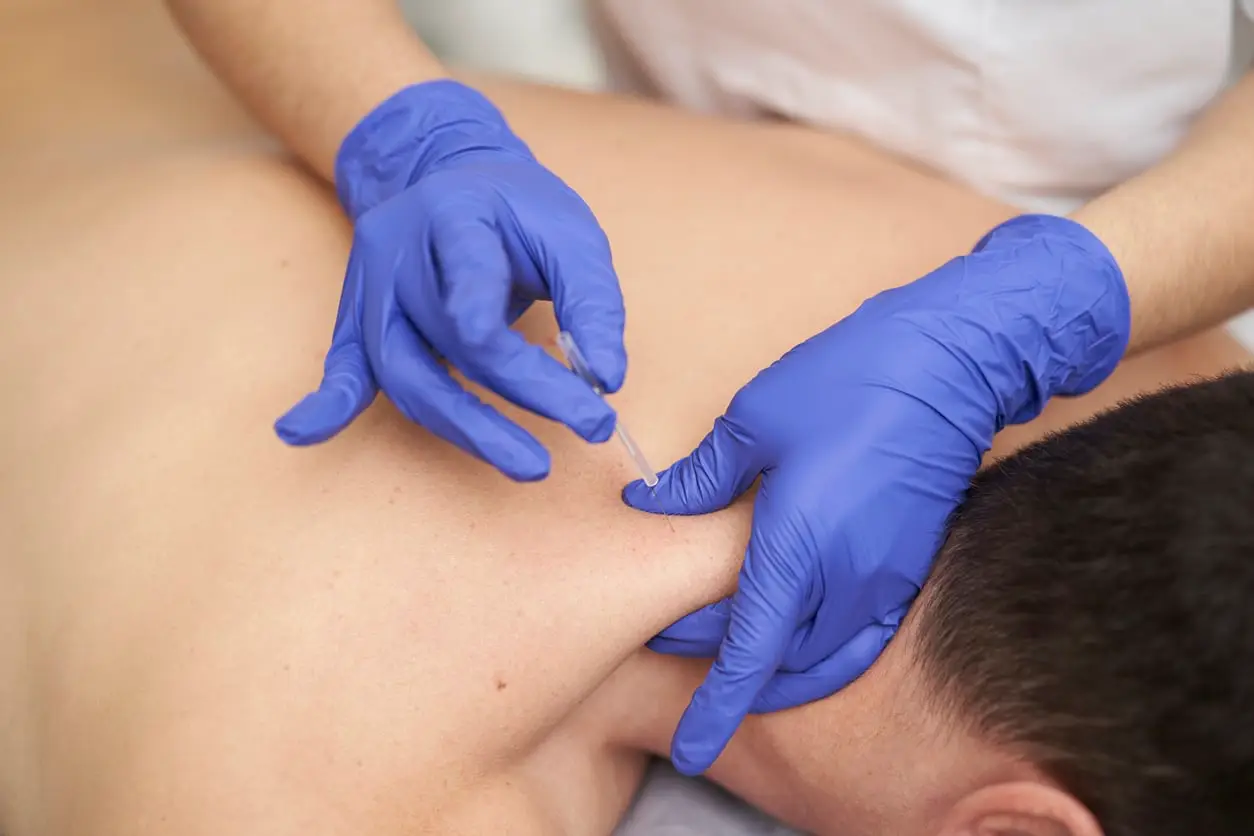
Dry needling is a skilled intervention performed by highly trained healthcare professionals, such as acupuncturists, where a thin, solid filament needle is inserted through the skin directly into a myofascial trigger point.1 It’s important to note that the name “dry” simply means that nothing is injected into the body; the needle itself is the therapeutic tool.7 This procedure is almost always used as part of a larger, comprehensive pain management plan that may also include therapeutic exercise, stretching, and patient education to address the root cause of the dysfunction.7
The Science of Relief: How Dry Needling Works
To understand how dry needling provides relief, it’s helpful to first understand what a trigger point is on a microscopic level. Think of it as a tiny “energy crisis” within the muscle.8 When a muscle is overworked, injured, or held in a poor posture, a small patch of muscle fibers can get stuck in a contracted state. This sustained contraction chokes off its own blood supply, leading to a lack of oxygen (hypoxia) and nutrient delivery.8 This “energy crisis” causes a buildup of metabolic waste products, which makes the local environment more acidic and sensitizes the nearby nerve endings, leading to the characteristic pain and tenderness of a trigger point.10 Dry needling works to break this cycle through several simultaneous mechanisms.
Mechanism 1: The Local Twitch Response (The “Reboot”)
One of the most important effects of dry needling is the “local twitch response” (LTR). When the therapist accurately inserts the needle into the trigger point, it often causes a brief, involuntary contraction or twitch in the taut band of muscle.7 While it might feel like a strange cramp or flutter, this response is a powerful therapeutic sign that the treatment is working. The LTR is believed to act like a “reset button” for the muscle. It mechanically disrupts the dysfunctional, contracted muscle fibers and interrupts the abnormal nerve signals that are keeping the muscle tight.12 This allows the muscle fibers to finally relax, release their grip, and return to a normal, resting state.
Mechanism 2: Biochemical and Circulatory Reset
The insertion of the needle creates a controlled micro-trauma at the site of the trigger point. The body interprets this as a new, minor injury and immediately initiates a healing response. This process dramatically increases local blood flow to the previously “energy-starved” area.7 This fresh circulation is critical because it flushes out the accumulated pain-causing chemicals and acidic waste products, such as substance P and calcitonin gene-related peptide (CGRP), that were perpetuating the pain cycle.10 At the same time, the increased blood flow delivers a fresh supply of oxygen and nutrients, helping to resolve the “energy crisis” and restore a normal chemical balance within the muscle tissue.
Mechanism 3: The Neurological Response (Natural Pain Relief)
Beyond the local effects in the muscle, dry needling also has a powerful effect on the nervous system. The stimulation from the needle activates specific sensory nerve fibers (known as A-delta fibers) that travel from the muscle to the spinal cord and up to the brain.12 This stimulation can trigger what is known as the “gate control theory of pain,” where the signals from the needle effectively block or override the chronic pain signals from the trigger point. Furthermore, this process can stimulate the brain to release its own potent, natural pain-relieving chemicals, including endorphins and enkephalins.9 These are the body’s own morphine-like substances, which produce a powerful analgesic effect and contribute to the sense of relief many people feel after a session.
These three mechanisms—the mechanical reboot, the chemical reset, and the neurological pain relief—don’t happen in isolation. They form a powerful cascade of healing. The physical twitch response is the catalyst that allows the circulatory system to flush out irritating chemicals, which in turn calms the sensitized nerves, while the brain simultaneously releases its own painkillers. This demonstrates that dry needling is far more than just “poking a sore spot”; it is a sophisticated physiological intervention that actively stimulates the body’s own powerful healing and pain-control systems.
Dry Needling vs. Acupuncture: Understanding the Key Differences
One of the most common points of confusion is the difference between dry needling and acupuncture. While both therapies use the same primary tool—a thin, sterile, solid filiform needle—their underlying philosophies, diagnostic methods, and treatment goals are fundamentally different.9 Understanding these distinctions is crucial for choosing the right therapy for a specific condition.
Philosophical and Historical Divide
The core difference lies in the medical paradigms from which each practice originates.
Dry Needling: This is a relatively modern intervention rooted in Western medicine. Its principles are based on a detailed understanding of human anatomy, physiology, and the neuromuscular system.9 A practitioner performing dry needling is targeting a myofascial trigger point—a physically identifiable, palpable knot in a muscle that has been confirmed through a physical examination to be the source of a patient’s pain and movement dysfunction.5
Acupuncture: This is an ancient healing art that forms a central component of Traditional Chinese Medicine (TCM), with a history spanning thousands of years.9 Its philosophy is centered on the concept of “qi” (pronounced “chee”), which is considered the body’s vital life force or energy. According to TCM, qi flows through the body along specific pathways called meridians. The goal of acupuncture is to restore the smooth and balanced flow of qi to promote health and healing.16 The target is an “acupoint,” a specific location on this energetic map, which may or may not correspond to a site of pain.18
Practical Differences in Application
These differing philosophies translate into very different clinical approaches.
Diagnosis: A physical therapist preparing to perform dry needling will conduct a musculoskeletal examination, palpating muscles to locate the specific taut band and trigger point that reproduces the patient’s familiar pain symptoms.5 In contrast, a licensed acupuncturist’s diagnosis is based on TCM principles, which may involve a holistic assessment of the patient’s overall state, including examining the tongue and feeling the pulse at the wrist to identify patterns of energetic imbalance.15
Needle Placement: In dry needling, the needles are inserted directly into the dysfunctional muscle tissue at the site of the identified trigger point.1 In acupuncture, needles are placed at specific acupoints along the meridians. These points are believed to have systemic effects and may be located far from the actual area of pain.9 For example, an acupoint on the hand might be used to treat a headache.
Treatment Goal: The goal of dry needling is highly specific: to deactivate the trigger point, release muscle tension, reduce pain, and restore normal movement and function to that muscle.7 The goal of acupuncture is typically broader and more holistic. It aims to rebalance the body’s energy to treat a vast array of conditions, which can range from musculoskeletal pain to systemic issues like anxiety, insomnia, digestive problems, and stress.16
Ultimately, the choice between these two therapies is a choice between two distinct medical frameworks. Dry needling represents a biomechanical, “fix-it” approach that is a direct extension of a physical therapist’s anatomical assessment. For a person suffering from a clear musculoskeletal issue, such as a painful knot in the upper back from poor posture at a desk, the logic of dry needling—inserting a needle into that exact knot to release it—is direct, intuitive, and grounded in Western anatomical principles.
The Data Snapshot: Is Dry Needling Effective According to Research?
When evaluating any medical treatment, it’s essential to look beyond anecdotes and examine the scientific evidence. In modern medicine, the highest level of evidence comes from systematic reviews and meta-analyses. These are powerful “studies of studies” that gather and analyze the results from all available randomized controlled trials on a topic to arrive at the most reliable and unbiased conclusion possible.19
The Overwhelming Conclusion for Short-Term Pain
When it comes to dry needling, the scientific literature has reached a strong and consistent conclusion: dry needling is significantly more effective than sham treatment, placebo, or no treatment for reducing musculoskeletal pain in the immediate to 12-week period.14 This finding is supported by numerous high-quality systematic reviews and meta-analyses covering a wide range of conditions.
Upper Body Pain: For pain in the upper quarter (neck, shoulder, and upper back), a landmark 2013 meta-analysis found that dry needling provides an immediate decrease in pain compared to sham or placebo treatments.12 An updated 2020 review focusing specifically on neck pain confirmed these findings, showing that dry needling reduces both pain intensity and pain-related disability in the short term.22
Low Back Pain: For low back pain, one of the most common complaints seen in physical therapy, a 2023 systematic review concluded that dry needling is an effective procedure for treating myofascial pain in patients with both acute and chronic low back pain.2
Widespread Musculoskeletal Pain: A comprehensive 2017 meta-analysis looked at dry needling across all musculoskeletal pain conditions. It concluded that there is very low- to moderate-quality evidence that dry needling is more effective than no treatment, sham needling, and other treatments for reducing pain in the immediate to 12-week follow-up period.3
The Power of Precision: Deep vs. Superficial Needling
Further reinforcing the idea that the effectiveness of dry needling comes from its precise, targeted nature, research has compared the effects of deep versus superficial needling. Deep dry needling involves inserting the needle far enough to penetrate the muscle and directly engage the trigger point, while superficial needling involves inserting the needle only into the tissue above the muscle.19 A 2019 meta-analysis found a consistent and statistically significant effect favoring deep needling over superficial needling for pain relief in spine-related conditions.19 This suggests that the mechanical disruption of the trigger point itself is a key component of the therapy’s success.
An Honest Look at the Evidence
To maintain scientific integrity and provide a balanced view, it is also important to acknowledge the current limitations of the research.
Long-Term Data: While the evidence for short-term benefits is robust, the data on long-term effectiveness (beyond 6 to 12 months) is currently less conclusive. Several systematic reviews note that while dry needling is favored for decreasing pain at longer follow-ups, the effect is not always statistically significant, and more high-quality research is needed to clarify its long-term impact.3
Functional Outcomes: Similarly, the evidence for improving function (e.g., the ability to perform daily activities) is not as consistently strong as the evidence for reducing pain. While some reviews find that dry needling leads to superior functional outcomes compared to no treatment, others report contradictory results or no significant difference when compared to other active treatments.14
This pattern in the evidence points to a more nuanced understanding of dry needling’s role in rehabilitation. It is not a standalone magic bullet, but rather a powerful tool for breaking the pain cycle. The robust, evidence-backed benefit of dry needling is its ability to provide rapid, short-term pain relief. This relief creates a crucial “window of opportunity” for recovery. Pain is often the primary barrier that prevents a patient from engaging in the therapeutic exercises needed to correct the underlying problems, such as muscle weakness, poor posture, or faulty movement patterns. By effectively “turning down the volume” on pain, dry needling removes this barrier, making the entire rehabilitation process more tolerable and ultimately more effective. It acts as a catalyst that enables the true, long-term solution: restoring function through movement and strengthening.
Dry Needling vs. Manual Therapies: Needles or Hands?
Another common question is how dry needling compares to hands-on techniques like myofascial release, ischemic compression, or deep tissue massage. These manual therapies share a common goal with dry needling: to release tight, painful knots in muscle and the surrounding connective tissue (fascia).25 The primary difference lies in the tool used and the precision it allows.
Precision, Depth, and Evidence
While manual therapies are excellent for addressing general muscle tightness, improving circulation over a broad area, and promoting relaxation, a key advantage of dry needling is its unparalleled precision.13 A thin, flexible needle can penetrate deeper into muscle tissue to reach and release a stubborn, deep-seated trigger point that a therapist’s fingers, knuckles, or elbows simply cannot access effectively.5 This is particularly relevant for muscles that are located beneath other larger muscles.
When researchers have directly compared dry needling to trigger point manual therapy (TPMT) in systematic reviews, the results have been interesting. A 2020 meta-analysis found that for neck and upper back pain, both dry needling and manual therapy techniques improve pain and function in the short to medium term, with neither intervention being definitively superior to the other.28 This suggests that both are valuable tools in the hands of a skilled therapist.
This evidence allows for a more sophisticated, favorable framing of dry needling. It is not necessarily “better” than manual therapy in all cases, but it serves as a more advanced or specialized tool for specific, challenging situations. It is often the ideal choice when progress with hands-on techniques has stalled, or for trigger points that are too deep, too specific, or too sensitive to tolerate the direct, broad pressure of manual therapy.5
Dry Needling as a Catalyst for a Complete Plan
In modern, evidence-based physical therapy, the conversation is rarely about choosing one isolated treatment over another. Instead, the focus is on creating an integrated, comprehensive plan of care. Dry needling shines as a powerful adjunct therapy that can make other essential treatments, particularly therapeutic exercise, significantly more effective.6
The synergy works like this:
Release: Dry needling is used to “unlock” the tight, painful muscle by deactivating the trigger point. This immediately reduces pain and can improve the muscle’s ability to lengthen and contract normally, restoring mobility.31
Retrain: With the primary source of pain and inhibition removed, the physical therapist can then introduce targeted strengthening and stretching exercises. This is the crucial step for creating lasting change, as it addresses the underlying root causes—such as muscle weakness, poor posture, or motor control deficits—that allowed the trigger point to develop in the first place.9
This integrated approach is supported by clinical evidence. Studies have shown that combining dry needling with a physical therapy exercise program leads to superior outcomes compared to other interventions alone.32Furthermore, from a healthcare perspective, this efficiency can be cost-effective. One study found that patients receiving trigger point dry needling as part of their care had fewer follow-up visits to their physicians and lower costs associated with absenteeism from work compared to those who only received an exercise program.34
This highlights that the true value of dry needling is unlocked when it is part of a holistic rehabilitation strategy guided by the clinical reasoning of an expert physical therapist. The debate is not “Needles vs. Hands,” but rather “Isolated Treatment vs. Integrated Rehabilitation.” A skilled therapist has a full toolbox and knows precisely when to use each tool to achieve the best outcome. By framing dry needling as a key that unlocks the full potential of a comprehensive therapy program, its importance is elevated beyond a simple pain-relieving modality.
At-a-Glance Comparison: Choosing the Right Therapy for You
To help you see the big picture, here’s a simple snapshot comparing the different therapies we’ve discussed. Think of this as a guide to help you have a more informed conversation with your healthcare provider.
Therapy
Primary Goal
Mechanism of Action
Best For…
Dry Needling
Rapidly decrease pain, release specific muscle knots (trigger points), and restore muscle function.
Uses a needle to create a micro-lesion, eliciting a twitch response that “resets” the muscle, increases blood flow, and triggers natural pain relief.7
Specific, palpable muscle knots; chronic pain that has plateaued with other treatments; deep trigger points; enhancing a comprehensive physical therapy program.9
Acupuncture
Restore the body’s energetic balance (qi) to improve overall health and treat a wide range of systemic conditions.
Uses needles to stimulate specific “acupoints” along energy pathways (meridians) to influence the body’s systemic functions and promote healing.9
Chronic pain conditions like fibromyalgia, stress and anxiety, insomnia, digestive issues, and a holistic approach to wellness.17
Myofascial Release / Massage
Reduce general muscle tension, improve circulation, and promote relaxation.
Uses hands-on pressure and stretching to manipulate soft tissues, release adhesions, and reduce overall muscle stiffness across a broad area.35
General muscle soreness and tightness; stress relief; improving flexibility over a larger region; complementing other therapies.27
Therapeutic Exercise
Correct underlying weakness and imbalances, improve stability and mobility, and create long-term resilience against injury.
Uses targeted strengthening and stretching to improve muscle capacity, endurance, and motor control, addressing the root cause of pain.37
Building long-term strength and function; preventing pain recurrence; the foundational component of any successful rehabilitation plan.39
Is Dry Needling the Right Choice for Your Pain?
Based on the evidence and clinical application, certain individuals are particularly well-suited for dry needling. The ideal candidate is often someone who has not found lasting relief from other conservative treatments like stretching, foam rolling, or massage.9 It is especially effective for those who can feel a distinct, tender “knot” in a muscle that, when pressed, reproduces their familiar pain, sometimes in a referred pattern.26 Athletes seeking to quickly address muscular dysfunction to return to sport also find it highly beneficial.31
What to Expect During and After Treatment
If you and your physical therapist decide that dry needling is appropriate, the process is straightforward and safe.
During the Session: Your therapist will first locate the trigger point by hand. After sterilizing the skin, they will gently tap the thin needle into the targeted spot. You might feel a small prick as the needle enters the skin, but often the primary sensation is a deep, dull ache or the characteristic “local twitch response” as the muscle grasps and releases the needle. This twitch, while it can be surprising, is a positive sign that the trigger point has been successfully engaged.8 Depending on the technique and the specific goal, the needle may be left in place for just a few seconds or for up to 20 minutes.7
After the Session: It is very common to experience some muscle soreness in the treated area for 24 to 48 hours. This feeling is often described as being similar to the soreness you would feel after a particularly intense workout.5 This is a normal response as the muscle begins its healing process. Alongside this temporary soreness, many patients report an immediate improvement in their range of motion and a significant decrease in the original pain that brought them to therapy.9
Safety and Contraindications
When performed by a physical therapist who has received specialized postgraduate training, dry needling is a very safe procedure with minimal risk.6 Side effects are typically minor and may include temporary soreness, bruising, or minor bleeding at the insertion site.40 That said, the therapy is not appropriate for everyone. To ensure patient safety, therapists will screen for contraindications, which include 10:
A significant phobia of needles.
Pregnancy, particularly in the first trimester.
The presence of a local or systemic infection.
A compromised immune system.
Use of anticoagulant (blood-thinning) medications, which can increase the risk of bruising.
Conclusion: Take the Next Step Towards a Pain-Free Life
The body of scientific evidence is clear: dry needling is a safe, minimally invasive, and effective technique for reducing musculoskeletal pain, particularly in the short term. It offers a modern, anatomy-based approach to treating one of the most common sources of chronic discomfort—myofascial trigger points.
However, the most crucial takeaway is that dry needling is not just an isolated treatment, but a powerful catalyst for lasting recovery. Its true strength is realized when it is skillfully integrated into a comprehensive physical therapy program. By “rebooting” dysfunctional muscles and breaking the debilitating cycle of pain, dry needling creates the opportunity for patients to engage in the therapeutic exercises that address the root cause of their problem. It paves the way for strengthening weak muscles, correcting poor movement patterns, and building a more resilient body.
If you are tired of living with persistent muscle pain and are ready to try a modern, targeted approach that is backed by scientific data, it’s time to have a conversation. Schedule a consultation with Dr Jordan Barber today to find out if dry needling can be the key to unlocking your recovery and helping you return to a pain-free, active life.
If you’re living with an overactive bladder, constant urinary frequency, sudden urgency, or urge incontinence, you already know how disruptive these symptoms can be. At our clinic, we offer Percutaneous Tibial Nerve Stimulation (PTNS) as a…
If you’re exploring dry needling for pain relief, particularly for conditions like myofascial pain syndrome, back pain, or other musculoskeletal disorders, you’ve likely encountered a confusing array of information. One of the biggest…
Neck pain and pain behind the eye can be a troublesome combination that affects many people. This discomfort can interfere with daily activities, causing frustration and reducing the quality of…
118 W. 72nd, Rear Lobby, Upper West Side, NY 10023 Evidence-based acupuncture and dry needling on the Upper West Side, NYC. From chronic pain, headaches, and pelvic floor dysfunction, Dr. Jordan Barber integrates the highest level of training with compassionate care to help you thrive. Disclaimer: This site does not provide medical advice. Always consult a qualified healthcare professional before making changes to your health. Read our full disclaimer
Quick Links
Got Questions?
Limited spots available each week book now to reserve yours