Post-Prostatectomy Pain: Treating Scar Tissue and Pelvic Dysfunction with Dry Needling and Acupuncture
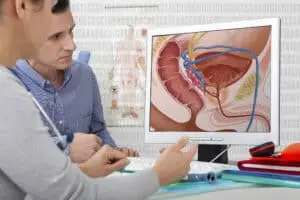
Post-prostatectomy pain is a common but often overlooked challenge faced by men after prostate removal surgery. While prostatectomy can be life-saving in cases of prostate cancer or serious prostatic disease, many patients are left with ongoing pelvic pain, urinary dysfunction, or discomfort in the penis, perineum, or lower pelvis—symptoms that persist long after the incision has healed.
These issues are typically not caused by the prostate—now removed—but by the residual effects of scar tissue, myofascial restrictions, and nerve irritation in the pelvic region. If you’ve been struggling with post-prostatectomy pain, know that there are non-invasive, body-based solutions available. At my clinic, I use dry needling and acupuncture to target the musculoskeletal and neurological components of this pain and help patients regain comfort, function, and quality of life.
What Causes Post-Prostatectomy Pain?
Surgical healing naturally leads to scar tissue formation. But in complex anatomical areas like the pelvis, dense or disorganized scar tissue can create long-term complications, including:
Restricted muscle movement or flexibility
Nerve compression (especially pudendal or perineal nerves)
Decreased circulation in pelvic structures
Compensatory tension in surrounding muscle groups, such as the pelvic floor, glutes, and lower abdominals
Even minimal scarring near nerve-dense regions can result in aching, burning, numbness, or pressure—especially during sitting, urination, or sexual activity.
How Dry Needling Helps Release Scar Tissue and Alleviate Pain
Dry needling uses sterile, fine needles to reach deep muscle bands (trigger points) and fibrotic tissues. For post-surgical pelvic pain, it can:
Mechanically disrupt scar adhesions to restore tissue mobility
Release excess muscle tension in pelvic floor muscles like the levator ani, obturator internus, and piriformis
Decompress irritated nerves entrapped by tight fascia
Promote local circulation and reduce inflammation
Downregulate hypersensitive nerve signals
Research has shown that dry needling can significantly reduce pelvic floor muscle tension and improve urinary symptoms in men with chronic pelvic dysfunction.³ Its ability to reach deep structures that manual therapy cannot makes it uniquely effective for post-surgical cases.
Acupuncture for Post-Surgical Pelvic Recovery
Acupuncture complements dry needling by influencing the nervous system and enhancing recovery. For men with post-prostatectomy pain, acupuncture can:
Reduce sympathetic overdrive (“fight-or-flight” stress that aggravates pain)
Improve blood flow to nerves and muscles
Modulate pain perception in the brain and spinal cord
Support relaxation, emotional regulation, and pelvic coordination
A recent clinical trial demonstrated that acupuncture, when combined with pelvic floor training, was more effective than exercises alone for improving urinary incontinence after prostate surgery.¹ This highlights its role in restoring pelvic function, not just masking symptoms.
What Symptoms Can Improve?
Patients often notice improvement in:
Dull, sharp, or burning pain in the penis, perineum, or lower pelvis
Tightness or pressure when sitting
Pain during urination or ejaculation
Persistent urinary urgency without infection
Tingling, numbness, or heightened sensitivity in the pelvic area
Clinical Support for Manual and Neuromuscular Therapies
Multiple studies have validated the use of physical and neuromuscular therapies for treating pelvic pain after prostatectomy:
A randomized trial showed acupuncture significantly reduced urinary incontinence severity when used alongside pelvic floor exercises.¹
Myofascial therapies like trigger point release were found to improve pelvic pain and function in men with chronic urologic pain syndromes.²
A case report demonstrated that dry needling successfully resolved pelvic tension and urinary frequency in a male patient with pelvic floor dysfunction.³
These findings reflect what many patients experience: pelvic muscle and fascial dysfunction are often missed in standard care—and treating them directly can provide lasting relief.
My Approach
At my clinic, I work closely with men recovering from prostatectomy to create targeted, body-based treatment plans. Care is always individualized and may include:
Dry needling to release scar tissue and reduce muscular tension
Acupuncture for nervous system regulation and improved pelvic blood flow
Education on breathing, posture, and pelvic biomechanics
Coordination with your existing care team, including urologists, oncologists, or physical therapists
All treatments are performed externally, with a focus on comfort, consent, and whole-body integration.
Schedule Your Appointment
If you’re experiencing post-prostatectomy pain, know that it’s not something you have to simply “live with.” Dry needling and acupuncture offer precise, evidence-based solutions that can help you reduce pain, restore mobility, and move forward—without additional medications or surgery.
Book your consultation today to start your path toward recovery.
Cavalcanti AGC, Lima SV, de Araújo RF, et al. Effectiveness of systemic acupuncture in the control of urinary incontinence in prostatectomized men: a randomized clinical trial. Braz J Nurs. 2022;21(4):e20220012. doi:10.36489/2317-5367.2022v21i4p1-12. PubMed Link
Fitzgerald MP, Anderson RU, Potts J, et al. Randomized multicenter feasibility trial of myofascial physical therapy for the treatment of urological chronic pelvic pain syndromes. J Urol. 2013;189(1 Suppl):S75-S85. doi:10.1016/j.juro.2012.11.018. PubMed Link
Rahbarian M, Rezasoltani Z, Dadarkhah A, et al. Dry Needling in Myofascial Tracks in Non-Relaxing Pelvic Floor Dysfunction: A Case Report. J Bodyw Mov Ther. 2018;22(3):574-578. doi:10.1016/j.jbmt.2017.05.019. PubMed Link
Neck pain, whether it’s the sharp twinge of acute neck pain from a stiff neck, the persistent ache of chronic neck pain after long hours at the computer, or the…
If you’ve ever leaked a little urine when you laugh, sneeze, or jump, you’re not alone. This is called stress urinary incontinence, and it affects millions of women—especially after childbirth, surgery,…
Living in NYC, an active lifestyle or even daily commutes can take a toll. Lower back pain is an incredibly common complaint we see at our Upper West Side clinic.…
118 W. 72nd, Rear Lobby, Upper West Side, NY 10023 Evidence-based acupuncture and dry needling on the Upper West Side, NYC. From chronic pain, headaches, and pelvic floor dysfunction, Dr. Jordan Barber integrates the highest level of training with compassionate care to help you thrive. Disclaimer: This site does not provide medical advice. Always consult a qualified healthcare professional before making changes to your health. Read our full disclaimer
Quick Links
Got Questions?
Limited spots available each week book now to reserve yours